
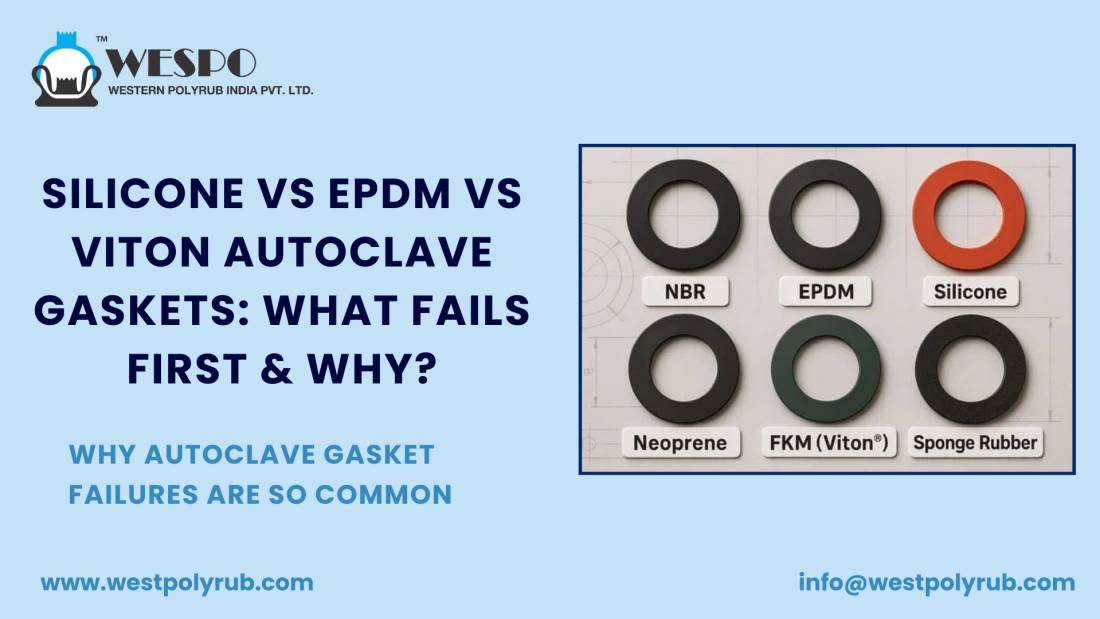
Introduction: Why Autoclave Gasket Failures Are So Common
Autoclave gaskets operate in one of the most punishing sealing environments in industry. High temperature, saturated steam, pressure cycling, and aggressive cleaning agents combine to stress elastomers far beyond normal service conditions. As a result, autoclave gasket failure is not a question of if, but when.
Yet most premature failures are avoidable. In many cases, the root cause is incorrect material selection rather than poor manufacturing. Silicone, EPDM, and Viton (FKM) are the most widely used elastomers for autoclave door gaskets, but each behaves very differently under steam sterilization.
This guide breaks down what fails first, why it fails, and how to choose the right autoclave gasket material based on real operating conditions—not marketing claims.
Related Topics : Rubber Extrusions : Types, Shapes & Real-World Applications Across Industries
Understanding Autoclave Operating Conditions
Before comparing materials, it’s important to understand what actually damages autoclave gaskets over time.
Key Stress Factors Inside an Autoclave
Autoclave gaskets are exposed to:
- Temperatures typically between 121°C and 134°C
- Saturated steam with repeated pressure cycling
- Rapid heating and cooling
- Chemical disinfectants and cleaning agents
- Continuous compression at the door interface
These conditions cause elastomers to degrade through thermal aging, compression set, hydrolysis, and chemical attack. The dominant failure mode depends on the gasket material.
Why Material Choice Matters More Than Gasket Design
Many users focus on gasket shape or hardness while overlooking material chemistry. In steam environments, polymer backbone stability matters more than geometry.
The three most common autoclave gasket materials—EPDM, silicone, and Viton—have very different resistance profiles to heat, steam, and chemicals.
Understanding these differences is the key to extending gasket life and reducing downtime.
EPDM Autoclave Gaskets: Steam Resistance Champion
EPDM (Ethylene Propylene Diene Monomer) is widely regarded as the best general-purpose elastomer for steam applications.
Why EPDM Performs Well in Autoclaves EPDM’s molecular structure offers:
- Excellent resistance to hot water and steam
- Strong resistance to oxidation
- Good flexibility at elevated temperatures
- Stable performance under repeated sterilization cycles
This makes EPDM autoclave gaskets ideal for steam sterilizers in pharmaceutical, food, and laboratory environments.
Common EPDM Failure Modes Despite its strengths, EPDM does fail over time. Typical issues include:
- Compression set after prolonged static loading
- Gradual hardening due to thermal aging
- Reduced sealing force after extended service life
EPDM generally fails slowly and predictably, making it easier to maintain through planned replacement schedules.
Best Use Cases for EPDM Autoclave Gaskets
- Steam-only sterilization
- Food and pharmaceutical autoclaves
- Applications with minimal chemical exposure
Silicone Autoclave Gaskets: Flexibility with Trade-Offs
Silicone rubber is often chosen for autoclave gaskets due to its excellent temperature range and cleanliness.
Strengths of Silicone in Autoclaves Silicone offers:
- Excellent high-temperature stability
- Outstanding flexibility
- FDA and medical-grade compliance
- Low extractables and odorless performance
This makes silicone popular in medical autoclaves, cleanrooms, and laboratory equipment.
Why Silicone Often Fails First Despite its thermal stability, silicone has notable mechanical weaknesses:
- Lower tear strength than EPDM
- Poor abrasion resistance
- Vulnerability to mechanical damage at door edges
Common silicone autoclave gasket failures include:
- Tearing at corners
- Surface wear from repeated door closure
- Loss of sealing integrity due to mechanical fatigue
In practice, silicone gaskets often fail mechanically before they fail thermally.
Best Use Cases for Silicone Autoclave Gaskets
- Medical and laboratory sterilizers
- Applications requiring extreme cleanliness
- Lower mechanical stress environments
Viton (FKM) Autoclave Gaskets: Chemical Resistance Leader
Viton®, a fluoroelastomer (FKM), is known for its exceptional chemical resistance and high-temperature stability. Where Viton Excels.
Viton offers:
- Superior resistance to oils, solvents, and aggressive chemicals
- Strong thermal aging resistance
- Stable performance in harsh industrial environments.
It is often selected for autoclaves using chemical sterilants or aggressive cleaning protocols.
Why Viton Still Fails in Steam
Despite its reputation, Viton is not inherently steam-optimized. Typical failure modes include:
- Compression set under continuous load
- Reduced elasticity after repeated steam exposure
- Higher cost without proportional life gain in steam-only systems
In pure steam autoclaves, Viton often underperforms compared to EPDM despite its premium pricing.
Best Use Cases for Viton Autoclave Gaskets
- Chemical sterilization environments
- Mixed steam and solvent exposure
- Industrial autoclaves with aggressive cleaning agents
What Actually Fails First? Real-World Comparison
|
Material
|
Primary Failure Mode
|
Typical Life Pattern
|
|---|---|---|
|
EPDM
|
Compression set
|
Gradual, predictable
|
|
Silicone
|
Mechanical tearing
|
Sudden, localized
|
|
Viton
|
Permanent deformation
|
Slow elasticity loss
|
In steam-only environments, silicone often fails first, followed by Viton, while EPDM typically delivers the longest service life.
Installation & Design Mistakes That Accelerate Failure
Even the best autoclave gasket material will fail prematurely if installed incorrectly.
Common Causes of Early Gasket Failure
- Over-compression of the gasket
- Uneven door alignment
- Sharp metal edges at mating surfaces
- Incorrect gasket hardness or profile
- Poor surface finish on sealing faces
Material selection must be paired with proper gasket design and installation practices.
Maintenance & Replacement Best Practices
Preventive maintenance plays a critical role in autoclave gasket life.
Recommended Practices
- Inspect gaskets visually after each sterilization cycle
- Monitor compression set and elasticity
- Replace gaskets before complete seal failure
- Keep spare autoclave door gaskets in stock
- Clean gaskets with compatible, non-aggressive agents
Planned replacement costs far less than emergency downtime.
Compliance & Standards to Consider
For regulated industries, gasket material compliance is non-negotiable.
Common Requirements
- FDA-compliant elastomers
- USP Class VI (medical applications)
- ISO quality systems
- Material traceability and batch control
Ensure your autoclave gasket supplier provides full material documentation.
Choosing the Right Autoclave Gasket Material
There is no universal “best” autoclave gasket. The right choice depends on:
- Sterilization method (steam vs chemical)
- Temperature and pressure cycles
- Mechanical loading
- Regulatory requirements
- Cost vs lifecycle expectations
For most steam sterilization systems, EPDM offers the best balance of durability, performance, and cost. Silicone and Viton have their place—but only when used in the right conditions
FAQs: Silicone vs EPDM vs Viton Autoclave Gaskets
For steam-only applications, EPDM is generally the best choice due to its steam resistance and predictable aging.
Silicone typically fails due to mechanical tearing or abrasion, not temperature limitations.
Viton can handle heat but is less efficient in pure steam environments compared to EPDM.
Service life depends on cycles and conditions, but high-quality EPDM gaskets often last significantly longer than silicone in steam autoclaves.
Proper material selection, correct hardness, and avoiding over-compression significantly reduce compression set.
Final Thought: Failures Are Predictable—If You Understand the Material
Autoclave gasket failures rarely happen without warning. By understanding how silicone, EPDM, and Viton behave under steam, OEMs and maintenance teams can eliminate guesswork, reduce downtime, and extend equipment life.
Choosing the right gasket material is not about brand—it’s about chemistry, physics, and real operating data.
Need help selecting the right autoclave gasket material?
Talk to our sealing experts for application-specific recommendations and custom gasket solutions.


Add a Comment